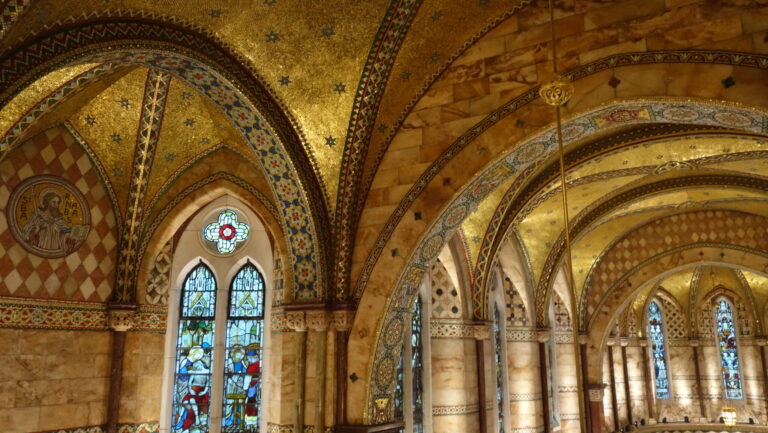


The chapel will be open to the public. Curators in residence Iain Forsyth and Jane Pollard present the third in a trio of immersive exhibitions responding to the layered history of the Fitzrovia Chapel and surrounding Middlesex Hospital site.
DATES
TIME
Monday to Wednesday: 11am – 6pm
Thursday: 11am – 8pm
Friday to Saturday: 11am – 6pm
Sunday: 12 noon – 5pm
The Fitzrovia Chapel is proud to present the third and final exhibition by its inaugural Curators-in-Residence, the award-winning artists and BAFTA-nominated filmmakers Iain Forsyth & Jane Pollard. Middlesex Hospital Blues completes the trilogy of exhibitions, following Souvenir and Miseris Succurrere Disco.
Middlesex Hospital Blues centres around Blue, the final film by Derek Jarman, released just four months before his death from AIDs-related complications. An unbroken field of saturated colour accompanied by a spoken text and score, Blue is a profound meditation on illness, perception and mortality. For Forsyth & Pollard the film holds a particular resonance: it was released while they were students at Goldsmiths – the same year they began making work together – and has remained a continuous point of inspiration and reference ever since.
Rather than install Jarman’s film, the curators translate its singular gesture into a collective act of remembrance and resistance. The setting is deliberate and poignant: The Fitzrovia Chapel was once part of Middlesex Hospital, home to the country’s first dedicated HIV/AIDS wards.
At the heart of Middlesex Hospital Blues is a newly commissioned ambisonic work by composer, Simon Fisher Turner, drawing on his archive recordings of Derek Jarman during their long-running friendship and collaboration. The piece was created with Tilda Swinton, another frequent Jarman collaborator. The new composition weaves excerpts from an assortment of Jarman’s texts and projects, including Blue and Bliss.
Swinton’s voice will move through the chapel via a bespoke speaker array developed with Arup, enveloped in Fisher Turner’s score and extending the methodology of the live performances into an immersive, spatial encounter.
Working in dialogue with the sound piece, the artist Jenkin Van Zyl presents a new sculptural installation. A two-way mirrored screen spans the full width of the chapel, its 16:9 proportions echoing the shape of the cinema screen that Blue itself once filled. Behind it stand two mirrored sculptures of an embracing couple, holding one another upright, positioned before the altar. These chrome sculptures draw on the dance marathons of 1920s and 30s America, where couples danced for days in exchange for food, shelter and the slim chance of a prize. Partners were assigned rather than chosen, and if one stopped moving, both were eliminated, so holding each other upright was less devotion than survival.
Further shaping the encounter, a lighting design by Arup suffuses the chapel’s ornate interior in a deep, saturated blue, bringing to life the monochrome of Jarman’s film. As an echo of Yves Klein’s International Klein Blue, the image has always been more than just a hue or a passive visual. Just as the premier of Blue was presented simultaneously on two separate devices – the Blue square broadcast on TV and sound on the radio – the colour has always been a thing to experience. At the Fitzrovia Chapel, it is a thing to exist within. Amongst that, slow bursts of bright white light puncture the space, producing ghostly retinal afterimages and recalling the flashes Jarman described during clinical eye examinations – “Blue flashes in my eyes.” In those moments, the embracing figures emerge phantasmagorically – closer to a mirage than a reveal – as shifting states pulse and flash behind the glass, momentarily dissolving reflection into revelation.
The smallest work in the exhibition is from Jarman himself. The Spirit of the World is an oil on canvas from 1981 will be presented on the chapel’s ornate font. Although now somewhat overshadowed by his filmmaking, Jarman continued to pursue painting throughout his life. Twelve years before Blue, in this small painting Jarman had already almost entirely emptied the frame.
Middlesex Hospital Blues also recalls the visit from Diana, Princess of Wales, who in 1987 visited the Middlesex Hospital’s HIV/AIDS unit and was photographed shaking hands, ungloved, with a HIV-positive patient. Wearing an ultramarine dress uncannily close to International Klein Blue, the widely circulated image marked a turning point in public attitudes to HIV/AIDS, putting compassion over fear. The exhibition stands as a timely tribute to this visit’s enduring resonance, ahead of its 40th anniversary next year.
The title resonates on several levels: Jarman’s Blue; the blue uniforms once worn by Middlesex Hospital staff, colloquially known as “hospital blues”; and the naming tradition of the blues as a universal feeling, with no lament as palpable as blues music. Through sound, colour and form, the exhibition becomes an act of bearing witness – to the lost, to the care given, and to what was once deemed unseeable, unspeakable and untouchable. Here, it becomes a communal lament.
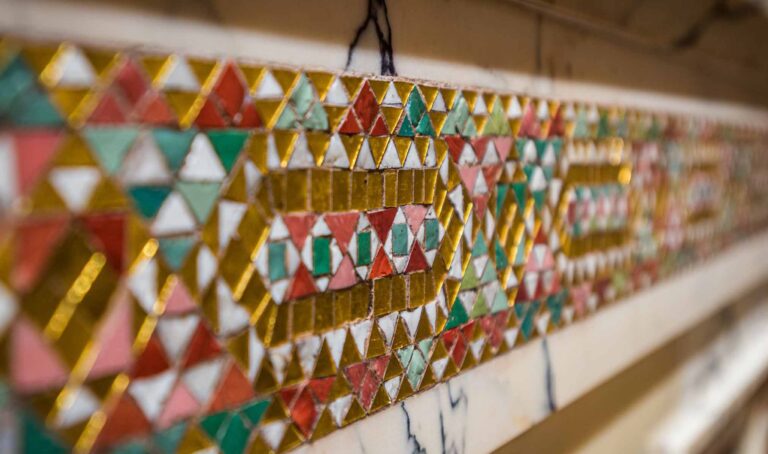
Middlesex Hospital Blues forms the third and final chapter in a trilogy of exhibitions curated by Forsyth & Pollard throughout 2026, each responding to the layered histories of The Fitzrovia Chapel and the surrounding former Middlesex Hospital site. It follows Souvenir and Miseris Succurrere Disco, which together traced the chapel’s glimmering, Byzantine-inspired interior as a site of memory, grief and collective care.
As with the previous editions, the exhibition is accompanied by a limited edition booklet of images and texts relating to the exhibition, including newly commissioned writing by the Mexican-American novelist Chloe Aridjis and designed by Chris Bigg of the legendary design studio v23. These shows form part of the chapel’s annual cultural programme.
ABOUT
Artists, BAFTA Nominated Directors and Curators in Residence at Fitzrovia Chapel
Iain Forsyth & Jane Pollard are London based artists and BAFTA nominated film directors working across contemporary art, film, installation, performance, sound, documentary and television drama. Collaborating since meeting at Goldsmiths in the mid 1990s, they have built an internationally recognised practice that moves between gallery exhibitions and cinematic storytelling.
Their work has been exhibited worldwide and is held in major public collections including Tate and the British Government Art Collection. Known for their immersive and interdisciplinary approach, Forsyth and Pollard frequently bring together music, literature, performance and visual art to create powerful multi sensory experiences.
Their debut feature film, 20,000 Days on Earth, won two awards at the Sundance Film Festival and received nominations from BAFTA and the Independent Spirit Awards. In 2015, they were awarded the Douglas Hickox Award for Best Debut Director at the British Independent Film Awards. Alongside their film work, they have collaborated with leading musicians and were co curators of the major exhibition The Horror Show at Somerset House.
In 2026, Iain Forsyth & Jane Pollard were appointed as the inaugural Curators in Residence at Fitzrovia Chapel in central London. This significant annual initiative invited them to devise a programme of immersive exhibitions responding to the chapel’s unique architectural, historical and spiritual context. Across the year, their exhibitions transformed Fitzrovia Chapel into a series of resonant and atmospheric environments, challenging the conventions of the traditional white wall gallery and deepening the chapel’s cultural programme.
Through film, installation and curatorial practice, Forsyth and Pollard continue to shape contemporary exhibition making in the UK, creating ambitious projects that explore storytelling, memory, music and collective experience.

Accessability
Outside the Chapel, there are two steps, which have a built-in wheelchair lift. The Chapel is wheelchair accessible. The majority is on one level, and there is a ramp that can be used to access the chancel (altar area). We have a fully accessible toilet. View more accessibility information
OUR CULTURAL PROGRAMME
Since 2016, we have collaborated with artists, curators, and institutions to present a programme of exhibitions that often reflects our history as the chapel for the Middlesex Hospital.